


What is the electrical conductivity of stainless steel equipment legs?
As a supplier of Stainless Steel Equipment Legs, I often encounter various inquiries from customers, one of the most common being about the electrical conductivity of these legs. In this blog, I aim to provide a comprehensive understanding of this topic, exploring the factors that influence conductivity, how it relates to different types of stainless steel equipment legs, and why it matters in practical applications.
Understanding Electrical Conductivity
Electrical conductivity is a measure of a material's ability to conduct an electric current. It is the reciprocal of electrical resistivity. Metals are generally good conductors of electricity because they have free electrons that can move easily through the material when an electric potential difference is applied. Stainless steel, which is an alloy primarily composed of iron, chromium, and nickel, also exhibits electrical conductivity, but its conductivity is lower compared to some pure metals like copper and aluminum.
The electrical conductivity of stainless steel is affected by several factors:
- Alloy Composition: Different grades of stainless steel have varying compositions, which can significantly impact their electrical conductivity. For example, the addition of elements such as chromium, nickel, and molybdenum can change the electronic structure of the alloy, altering its conductivity. Higher levels of alloying elements can sometimes reduce conductivity as they may interfere with the movement of free electrons.
- Microstructure: The microstructure of stainless steel, including grain size, phase distribution, and the presence of defects, can affect electrical conductivity. A fine - grained microstructure may impede the movement of electrons more than a coarse - grained one, leading to lower conductivity.
- Temperature: Electrical conductivity in metals generally decreases with increasing temperature. As the temperature rises, the atoms in the metal vibrate more vigorously, which scatters the free electrons and reduces their mobility.
Electrical Conductivity of Different Types of Stainless Steel Equipment Legs
We offer a variety of stainless steel equipment legs, each with its own characteristics and potential applications related to electrical conductivity.
- Stainless Steel Security Equipment: These legs are designed for applications where security and durability are paramount. The specific grade of stainless steel used in these legs is carefully selected to ensure a good balance between strength, corrosion resistance, and electrical conductivity. In security - related applications, electrical conductivity may be relevant in cases where grounding or electrical shielding is required. For example, in electronic security systems, proper grounding through the equipment legs can help prevent electrical interference and ensure the reliable operation of the system.
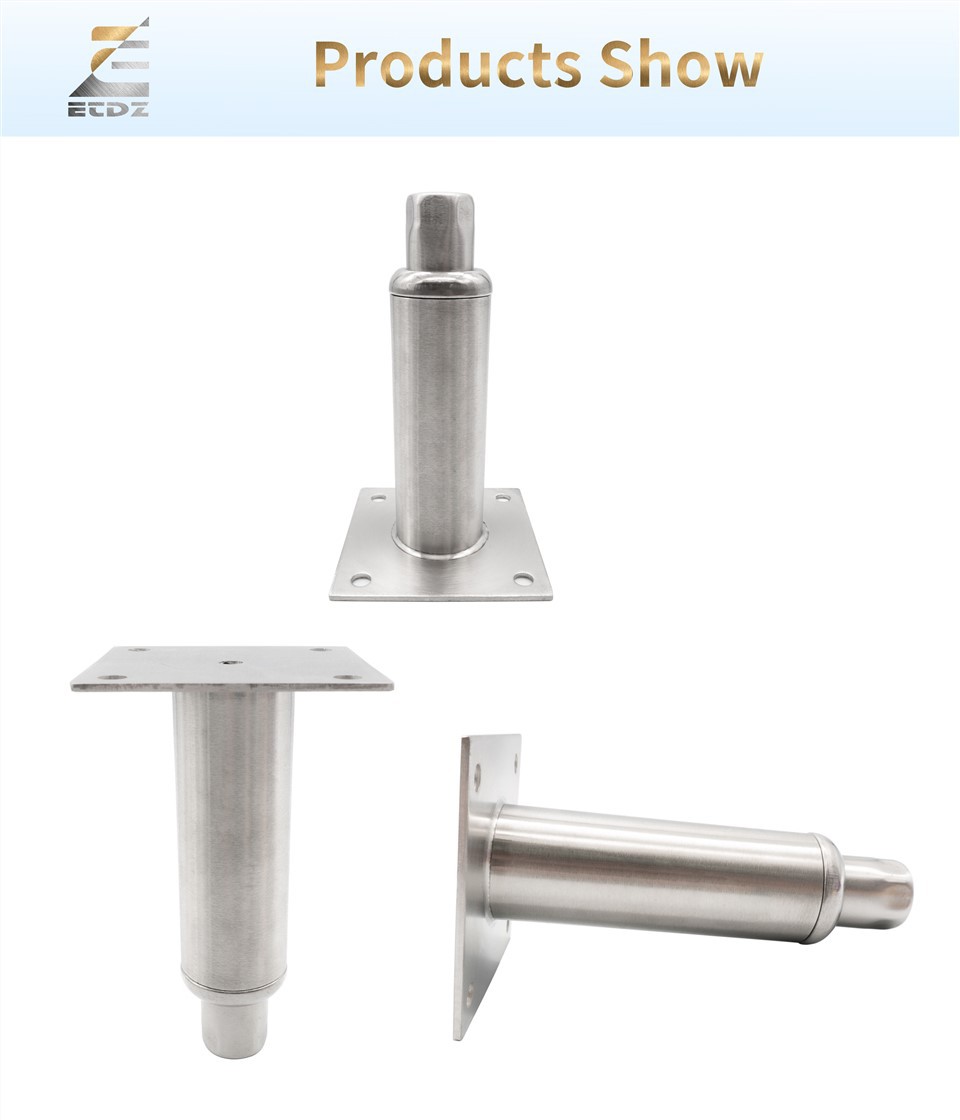
- Equipment Leg with Mounting Plate Hex Toe: This type of leg features a mounting plate and a hex toe, which provides stability and ease of installation. The electrical conductivity of these legs can be important in industrial settings where electrical equipment is installed on them. If the equipment generates static electricity or requires a conductive path for safety reasons, the legs need to have an appropriate level of conductivity. The mounting plate can also play a role in facilitating electrical connections, ensuring that the equipment is properly grounded.
- Stainless Steel Leg with Black Nylon Toe: The addition of a black nylon toe to the stainless steel leg offers advantages such as noise reduction and protection against scratches. However, the nylon toe is an insulator, which means that the overall electrical conductivity of the leg may be affected. In applications where the electrical connection needs to be maintained through the entire length of the leg, the presence of the nylon toe may require special considerations. For example, in some electrical testing setups, a modified design may be needed to ensure that the stainless steel part of the leg provides the necessary conductive path.
Practical Implications of Electrical Conductivity in Stainless Steel Equipment Legs
The electrical conductivity of stainless steel equipment legs can have several practical implications in different industries:
- Electronics and Electrical Engineering: In the electronics industry, stainless steel equipment legs may be used to support electrical components or enclosures. Good electrical conductivity can help in grounding the equipment, which is crucial for preventing electrostatic discharge (ESD) and protecting sensitive electronic circuits. In electrical power distribution systems, the conductivity of the equipment legs can ensure proper electrical continuity and safety.
- Food and Beverage Industry: In this industry, stainless steel equipment legs are widely used due to their corrosion resistance and hygiene properties. While electrical conductivity may not be the primary concern in most cases, it can still be relevant in equipment that uses electrical heating or cooling elements. Proper grounding through the legs can prevent electrical hazards and ensure the safe operation of the equipment.
- Chemical and Petrochemical Industry: Stainless steel equipment legs are commonly used in chemical processing plants and refineries. In these environments, electrical conductivity can be important for static dissipation. Static electricity can build up on equipment surfaces, which may pose a fire or explosion hazard. The conductivity of the equipment legs can help to safely discharge the static charge to the ground.
Measuring and Controlling Electrical Conductivity
To ensure that our stainless steel equipment legs meet the required electrical conductivity standards, we use various measurement techniques. One common method is the four - point probe method, which allows for accurate measurement of the electrical resistivity of the stainless steel material. By measuring the resistivity, we can then calculate the conductivity.
During the manufacturing process, we also take steps to control the factors that affect conductivity. This includes carefully selecting the appropriate grade of stainless steel, controlling the heat treatment process to achieve the desired microstructure, and maintaining consistent alloy composition.
Contact Us for Your Stainless Steel Equipment Leg Needs
If you are interested in learning more about the electrical conductivity of our stainless steel equipment legs or have specific requirements for your application, we encourage you to contact us. Our team of experts is ready to assist you in selecting the right type of equipment legs and providing you with detailed technical information. Whether you need legs for a small - scale electronic project or a large - scale industrial installation, we can offer customized solutions to meet your needs.
In conclusion, the electrical conductivity of stainless steel equipment legs is a complex but important property that can have significant implications in various industries. By understanding the factors that affect conductivity and carefully selecting the appropriate materials and designs, we can ensure that our products meet the highest standards of quality and performance.

References
- Callister, W. D., & Rethwisch, D. G. (2016). Materials Science and Engineering: An Introduction. Wiley.
- ASM Handbook Volume 1: Properties and Selection: Irons, Steels, and High - Performance Alloys. ASM International.